Wheatstone Bridge
What is a Wheatstone Bridge?
The Wheatstone Bridge is a classic circuit used to measure an unknown resistance by comparing voltage levels in two voltage divider networks.
It works by balancing two branches of resistors.
When the bridge is balanced, the voltage difference between the center nodes is zero.
That means:
VA = VB
When this happens, the ratio of the resistors on one side equals the ratio on the other side.
How the Bridge Works
Each side of the bridge acts like a voltage divider.
The node voltages are determined by:
VA = Vs × (R2 / (R1 + R2))
VB = Vs × (R4 / (R3 + R4))
When VA equals VB, the bridge is balanced and:
R1 / R2 = R3 / R4
This lets us solve for an unknown resistor R4 using ratios instead of direct measurement.
Watch the Video
Why This Circuit Is Useful
The Wheatstone Bridge is still used today in:
• Strain gauges
• Temperature sensors
• Pressure sensors
• Instrumentation circuits
It’s extremely sensitive and can detect very small resistance changes.
It’s extremely sensitive and can detect very small resistance changes.
Lab Demonstration
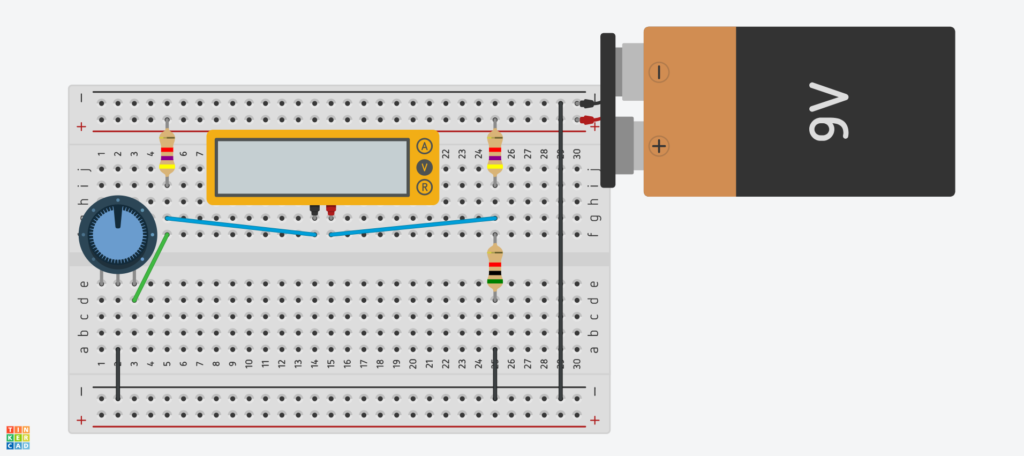
In the video above, we built a Wheatstone Bridge and measured the node voltages to determine when the bridge was balanced.
When the voltage difference between the center nodes reached zero volts, we knew the resistor ratios matched.
This confirmed the theory and showed how the bridge can be used to determine an unknown resistance.
Download My Handwritten Notes:
📘 Download Wheatstone Bridge Notes (PDF): Wheatstone Bridge Notes!
🔬 Click the image to open the interactive simulation in Build Circuits With Rich Labs:
Encouraging Bible Verse:
John 3:16 (KJV)
“For God so loved the world, that he gave his only begotten Son,
that whosoever believeth in him should not perish, but have everlasting life.”
Prefer video?
Watch full lessons on the Build Circuits With Rich YouTube Channel.
Back To: Videos